Repair vs. Replace: When Is It Time for a New Furnace?
The Short Answer: Repair or Replace?
If your furnace is more than 15 years old, needs frequent repairs, or your heating bills keep climbing despite no change in usage, it is likely time to replace rather than repair. For newer systems with minor issues, a targeted repair is usually the more cost-effective choice. The key is weighing the age of your system, the cost of the repair, and the efficiency gains a new unit would provide.
1. How Long Do Furnaces Last in North Texas?
The average lifespan of a gas furnace in Central Texas is 15 to 20 years. Because our heating season is shorter than in northern climates, furnaces in Godley, Cleburne, and Burleson often last closer to the upper end of that range. However, if your system was installed by a previous owner and you are unsure of its age, check the manufacturer's label on the unit — the serial number typically encodes the build date.
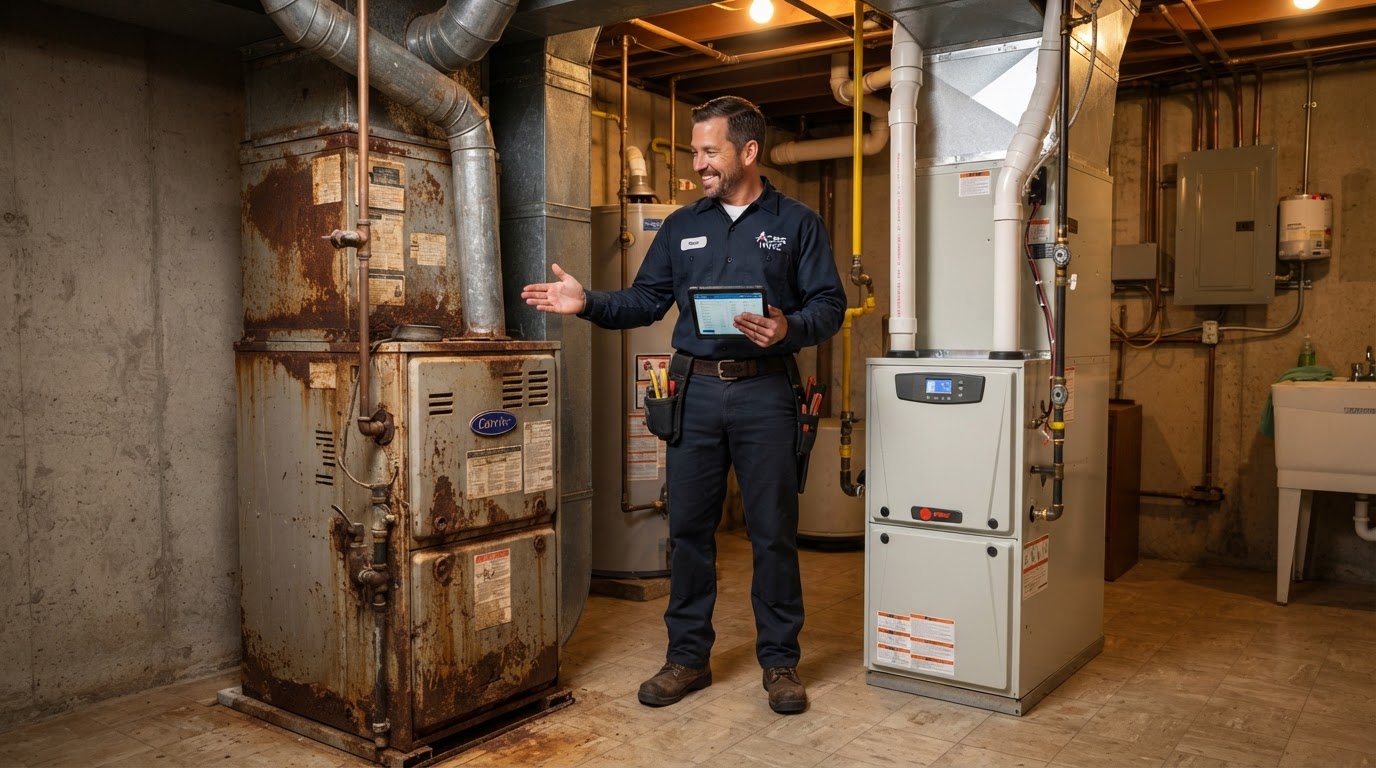
Even a well-maintained furnace loses efficiency as it ages. A 15-year-old furnace may operate at 65-70% AFUE (Annual Fuel Utilization Efficiency), meaning 30-35% of the fuel you pay for is wasted. Modern furnaces achieve 80% to 98.5% AFUE, which translates to significant savings on your winter gas bills.
2. The 50% Rule: A Simple Decision Framework
HVAC professionals often apply the 50% rule: if the cost of the repair is more than 50% of the cost of a new furnace, replace the unit. This is especially true for systems over 10 years old. A cracked heat exchanger, for example, is a safety hazard that typically costs $1,500-$2,000 to repair on an older unit — money that would be better invested in a new, warrantied system with higher efficiency.
For newer systems (under 8 years old) with a minor issue like a faulty igniter or a worn blower belt, repair is almost always the right call. These are inexpensive fixes that do not signal systemic failure.
3. Warning Signs It Is Time to Replace
Several red flags indicate your furnace is nearing the end of its useful life:
- Rising energy bills — if your winter gas bills have increased year over year without a rate hike from your utility company, your furnace is losing efficiency.
- Frequent repairs — if you have called a technician more than twice in a single heating season, those repair bills are adding up toward the cost of a new unit.
- Uneven heating — if some rooms are cold while others are warm, your furnace may no longer have the capacity to distribute heat evenly, or your ductwork may be compromised.
- Strange noises — banging, rattling, or screeching sounds from your furnace indicate worn or failing components that may be expensive to replace.
- Yellow pilot light — a healthy gas flame is blue. A yellow flame indicates incomplete combustion, which can produce carbon monoxide — a serious safety hazard that requires immediate professional attention.
- Dry air or excess dust — an aging furnace struggles to maintain proper humidity and filtration, leading to dry, dusty air throughout your home.
4. What Does a New Furnace Cost in the Godley Area?
Furnace replacement costs in Johnson County and surrounding areas typically range from $3,500 to $7,500, depending on the efficiency level, brand, and whether ductwork modifications are needed. A standard 80% AFUE furnace is the most affordable option, while a high-efficiency 96-98% AFUE modulating furnace costs more upfront but can cut your winter heating bills by 20-30%.
For homeowners in Weatherford, Granbury, and across Parker County, a dual-fuel system — pairing a heat pump with a gas furnace — offers the best of both worlds. The heat pump handles mild winter days efficiently, and the furnace takes over when temperatures drop below freezing. This hybrid approach can reduce annual heating costs by up to 40% compared to a gas furnace alone.
5. Efficiency Upgrades and Rebates
If you decide to replace your furnace, consider upgrading to a variable-speed or two-stage model. These units run at lower speeds most of the time, which uses less energy, maintains more even temperatures, and operates much quieter than single-stage furnaces that blast on and off.
Additionally, the Inflation Reduction Act offers federal tax credits of up to $600 for high-efficiency furnaces meeting specific AFUE criteria. Some North Texas utility providers also offer rebates for energy-efficient HVAC upgrades. Check with your utility company or ask your HVAC contractor about available incentives before making your final decision.
Serving Your Local Community
Fresh Air Energy Solutions provides expert HVAC maintenance and repair across Central Texas. Find services in your area:
Frequently Asked Questions
Need Professional HVAC Help?
Don't wait for a breakdown. Schedule your seasonal maintenance or emergency repair with our licensed technicians today.