
How to Prepare Your HVAC System for a Texas Summer
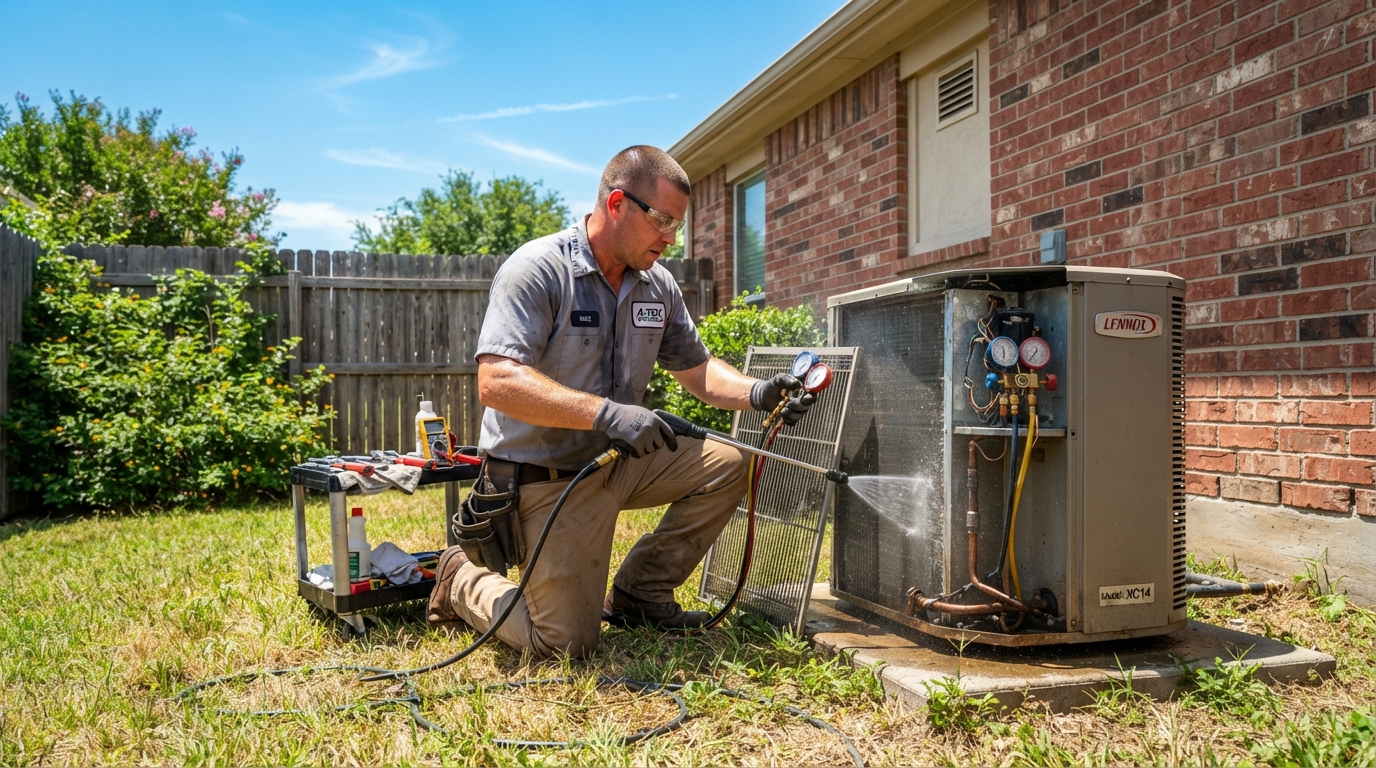
The Short Answer: How to Prepare Your AC
To prepare your HVAC system for a Texas summer, you must change your air filters, clear debris from the outdoor condenser unit, schedule a professional tune-up, test your thermostat, and inspect your ductwork for leaks. Taking these steps in the spring ensures your system won't fail when temperatures in Fort Worth and Godley hit triple digits. A well-maintained system runs more efficiently, keeps your energy bills manageable, and extends the overall lifespan of your equipment — which can save you thousands in premature replacement costs.
1. Change Your Air Filters Regularly
The simplest and most effective way to prepare your HVAC system is to change the air filter. A dirty filter restricts airflow, forcing your air conditioner to work harder, which increases your energy bills and the risk of a breakdown. In North Texas, where rural dust, cedar pollen, and high humidity are constant challenges, filters clog faster than you might expect.
Here is what we recommend for homeowners across Johnson County and surrounding areas:
- Use high-quality pleated filters with a MERV rating between 8 and 12 for the best balance of filtration and airflow.
- Change them every 30 to 60 days during peak summer usage when your system runs the longest.
- If you have pets in your Cleburne or Joshua home, or live on a dirt road near Godley, check and change them more frequently — sometimes every 2 to 3 weeks.
- A clogged filter can cause your evaporator coil to freeze up, leading to warm air blowing from your vents and potential compressor damage.
2. Clear the Outdoor Condenser Unit
Your outdoor unit needs space to breathe. Over the fall and winter, leaves, twigs, and dirt can accumulate around the condenser coils. This debris blocks airflow and forces the compressor to run at higher pressures, which shortens its lifespan and drives up your electric bill.
Ensure there is at least a two-foot clearance around the entire unit. Trim back bushes and carefully remove any debris from the fins. If the fins are bent, a professional HVAC contractor can comb them straight to restore proper airflow. You can also gently hose down the exterior of the unit to remove dust and pollen buildup, but avoid using a pressure washer — the high pressure can bend delicate aluminum fins and cause permanent damage.
3. Schedule a Professional Tune-Up
While DIY maintenance is important, nothing replaces a professional inspection. A licensed technician will go far beyond what a homeowner can do safely. During a comprehensive tune-up, your technician will:
- Check refrigerant levels — low refrigerant indicates a leak that, left unaddressed, can destroy your compressor.
- Inspect electrical connections and tighten them — loose wires are a leading cause of capacitor and contactor failures during summer heat waves.
- Clean the evaporator and condenser coils — dirty coils reduce efficiency by up to 30%.
- Lubricate moving parts to reduce friction and prevent motor burnout.
- Calibrate the thermostat to ensure accurate temperature readings and proper cycling.
- Inspect the condensate drain line for clogs — a backed-up drain can cause water damage to your ceilings and walls.
Scheduling this tune-up in March or April, before the first 100-degree day, means you will not be waiting behind a backlog of emergency repair calls when you need service most.
4. Consider an Upgrade
If your system is over 10 years old and you live in a rapidly growing area like Midlothian or Burleson, it might be time to consider a replacement. Modern high-efficiency systems can drastically reduce your summer cooling costs. With the new SEER2 standards now in effect, today's units are significantly more efficient than those installed a decade ago.
Signs it may be time to replace rather than repair include: frequent breakdowns, rising energy bills despite no change in usage, uneven cooling between rooms, or a system that runs constantly but never reaches your set temperature. A professional load calculation (Manual J) will ensure your new system is properly sized for your home — an oversized unit short-cycles and fails to dehumidify, while an undersized unit runs non-stop and still cannot keep up.
5. Seal Leaky Ductwork and Check Insulation
Even a brand-new, high-efficiency system will struggle if your ductwork is leaking. In many Central Texas homes, especially older properties in Weatherford or Granbury, duct joints have separated over time, allowing cooled air to escape into the attic before it ever reaches your living space. This forces your AC to run longer, increases wear on the compressor, and can raise your electric bill by 20% or more.
A professional duct inspection can identify leaks and seal them with mastic or approved tape. Additionally, check your attic insulation levels — the Department of Energy recommends R-38 to R-49 for North Texas attics. Proper insulation and sealed ductwork work together to keep conditioned air inside where it belongs, reducing the strain on your HVAC system during peak summer months.
Serving Your Local Community
Fresh Air Energy Solutions provides expert HVAC maintenance and repair across Central Texas. Find services in your area:
Frequently Asked Questions
Need Professional HVAC Help?
Don't wait for a breakdown. Schedule your seasonal maintenance or emergency repair with our licensed technicians today.