
The Ultimate Guide to Smart Thermostats in Texas
The Short Answer: Are Smart Thermostats Worth It?
Yes — a smart thermostat can save Central Texas homeowners 10-23% on annual heating and cooling costs, paying for itself in 1-2 years. Beyond savings, smart thermostats offer remote control, automated scheduling, maintenance alerts, and integration with smart home systems. For homes in Godley, Burleson, and surrounding areas where summer AC costs dominate the electric bill, a smart thermostat is one of the highest-ROI upgrades you can make.
1. How Smart Thermostats Save You Money
Traditional programmable thermostats require you to manually set schedules. If your schedule changes — which it often does — the programmed settings become wasted. Smart thermostats like the Nest, Ecobee, and Honeywell Home learn your habits automatically and adjust temperatures based on whether you are home, away, or asleep.
Key money-saving features include:
- Geofencing — uses your phone's location to detect when you leave and return, adjusting temperatures automatically so you are not cooling an empty house.
- Learning algorithms — after a week or two of manual adjustments, the thermostat builds a schedule based on your actual routine.
- Remote control — adjust your thermostat from anywhere via a smartphone app, so you can lower the AC before you arrive home or raise it if you forgot before leaving.
- Energy reports — monthly summaries show exactly how many hours your system ran and where you can save, helping you identify patterns and optimize settings.
2. Which Smart Thermostat Is Best for Texas Homes?
The three most popular options each have strengths:
- Nest Learning Thermostat (4th gen) — best for homeowners who want a set-it-and-forget-it experience. It learns your schedule within a week and requires minimal input. The sleek design and intuitive interface make it the most user-friendly option.
- Ecobee Premium — best for homes with multiple rooms or hot/cold spots. It includes a remote room sensor that lets you prioritize temperature in the bedroom, living room, or nursery instead of just the hallway where the thermostat is mounted.
- Honeywell Home T9 — best for homes with complex HVAC systems or whole-home humidifiers and dehumidifiers. It supports up to 20 room sensors and integrates well with existing Honeywell equipment.
For homes in Cleburne, Joshua, and rural Johnson County where temperature swings between rooms are common, the Ecobee with its remote sensors is often the best choice.
3. Installation: DIY or Professional?
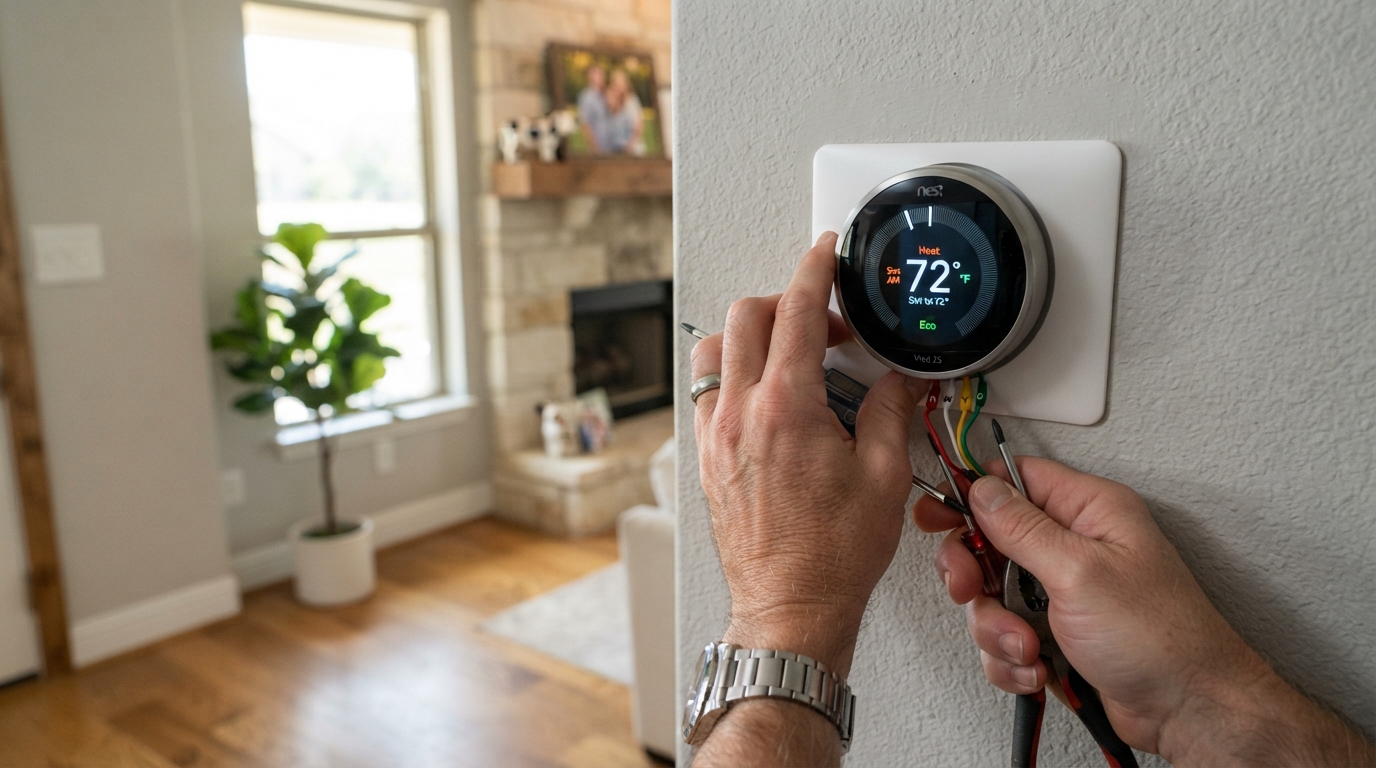
Most smart thermostats require a C-wire (common wire) to provide continuous power. If your home was built before 2010, you may not have a C-wire at your thermostat location. Some thermostats include a C-wire adapter (power extender kit) that can be installed at the air handler, but this requires opening your HVAC system and wiring it correctly.
For homeowners in Fort Worth, Weatherford, and Granbury, we recommend professional installation to ensure:
- The C-wire is properly connected or an adapter is correctly installed.
- Your HVAC system's wiring matches the thermostat's configuration (conventional vs. heat pump).
- Multi-stage systems are configured correctly so the thermostat triggers the right heating or cooling stage.
- The thermostat is calibrated to your system's actual performance, not just the default settings.
Professional installation typically costs $150-$300 and ensures your smart thermostat works correctly from day one — avoiding the frustration of a DIY install that does not function properly.
4. Smart Thermostat Features That Matter in Texas
In the North Texas climate, certain features are more valuable than others:
- Humidity control — look for a thermostat that can control a whole-home dehumidifier or adjust AC run times to manage indoor humidity, which is a major comfort factor in our muggy summers.
- Heat pump compatibility — if you have a heat pump or dual-fuel system, make sure the thermostat supports dual-fuel configurations with an outdoor temperature sensor.
- Fan control — the ability to run the fan independently of heating or cooling helps circulate air and even out temperature differences between rooms.
- HVAC monitoring — some thermostats alert you when your system is running longer than normal or when it is time to change your filter, helping you catch problems before they become breakdowns.
5. Rebates and Incentives
Many Texas utility companies offer rebates of $50-$150 for installing a qualified smart thermostat. Oncor, for example, offers rebates for ENERGY STAR certified smart thermostats in their service territory, which covers much of North Texas including Fort Worth, Burleson, and Cleburne. Additionally, the Inflation Reduction Act provides a $150 federal tax credit for smart thermostats meeting specific efficiency criteria. Check with your utility provider or ask your HVAC contractor about available rebates before purchasing.
Serving Your Local Community
Fresh Air Energy Solutions provides expert HVAC maintenance and repair across Central Texas. Find services in your area:
Frequently Asked Questions
Need Professional HVAC Help?
Don't wait for a breakdown. Schedule your seasonal maintenance or emergency repair with our licensed technicians today.